Sunday, 24 September 2017

Star Theory

Richard Dyer - Star Theory

His main ideas:
  • USP: unique selling point
  • Easy to parody 
  • Stars serve a purpose, which is to take money from customers
  • Selling merchandise, not just albums
  • Ideology
  • Character and personality that they have developed
His star theory can be split into three parts: the star as a construction, the star as a commodity and the star as a ideology.

The star as a construction:
He states that the star is not a real person, but a construction, and is constructed through magazines, music videos, advertising etc. Lady Gaga is an example of a contructed star, as her image is different and unique, which surprises the audience but allows them to recognise her.

The star as a commodity:
This is where the artist is produced to make money from merchandise, concerts etc. The record labels know how to make money; they produce merch which the audiences will buy, and also set trends.

The star as an ideology:

Stars will represent certain social groups and have their own views which produces an ideology. Fans often copy stars' styles and ways of thinking etc as they are role models. For example, an artist with strong views about a topic will have fans who support the same thing - almost like following them in their footsteps.


Monday, 18 September 2017

YouGov


When looking on YouGov for the indie band The 1975, I found that the stereotypical audience for this band were female, aged between 18-25 and within the social grade of C2DE. I found that they were left wing for politics and their professions are within entertainment, finance and accounting.

I thought that by looking at different artists on YouGov, it would give me a good idea on who my target audience would be for my music video.


I also looked at the demographics for the indie band Catfish & the Bottlemen. Being a fan of this band, I would be able to recognise myself within these results. The typical age range for this band are between 18-24, the gender of female being the main audience and liking similar music to Catfish. Researching bands specifically from the indie genre would allow me to see who my main audience would be for my music video, and also the things which could be included.

I finally decided to research the band whos song I am using in my music video. I found that fans of Wolf Alice were generally males between the ages of 18-24. Even though this gender outcome was different to the others I researched, the age ranges were all very similar to each other.

Wednesday, 13 September 2017

Intertextuality

Intertextuality - 'the relationship between texts, especially literary ones'


Julia Kristeva came up with the term intertextuality in 1966 and explained that there are two relationships occuring whenever we read a text. She explained that there is a relationsip between us and the author, and between the text and other texts. 

There are three different types of intertextuality within texts:
  1. Parody - this is seen as a way to embarrass and ridicule the original.
  2. Patische - this is similar to parody, but it works in a way which is gentler and has slightly more respect for the original.
  3. Homage - this is more about respecting the original work.
Parody


An example of a parody music video would be All Time Low's 'I Feel Like Dancin''. This includes many references to different music videos, such as Katy Perry's 'California Gurls' music video, Lady Gaga's 'Bad Romance' and Justin Bieber's 'Baby' music video. In the video, they mock the artists by dressing in similar costumes and pretending to be them. 


Here, the band copies the costume and dance within 'Bad Romance'.


Patische


An example of a Patische music video would be 'Love Story' by Taylor Swift. The video includes a Romeo & Juliet styled theme throughout. The music video features a similar narrative to the film, hence the intertextuality is clear throughout.
Here, Taylor is seen to be doing a similar 
thing to the characters in the film.
Image result for romeo and juliet


Homage


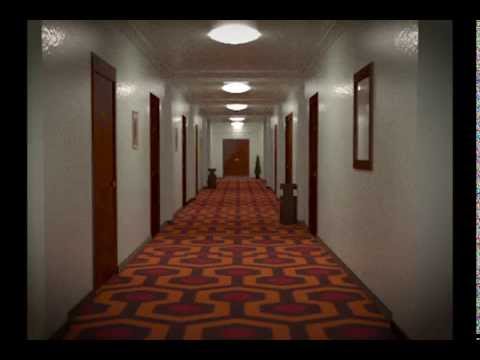
30 Seconds to Mars' 'The Kill' music video is an example of a homage video, as the overall idea of the video is taken from the film 'The Shining'. The band members play in a similar hotel to the one featured in the film and the overall storyline is very similar.


The hallway featured in the music video is 
very similar to the one used in the film.

Image result for the shining hallway

Tuesday, 12 September 2017

Todorov Narrative

Steps:

What happens -
1) the narrative starts with an equilibrium
2) an action or character disrupts the equilibrium
3) a quest to restore the equilibrium begins
4) the narrative continues to a climax
5) resolution occurs and equilibrium is restored

Propp's seven character types:


  1. The hero
  2. The villain
  3. The donor/helper
  4. The helper
  5. The princess
  6. The false hero
  7. The dispatcher

Foo Fighters - Learn To Fly https://www.youtube.com/watch?v=1VQ_3sBZEm0

When we looked at the Foo Fighter's 'Learn to Fly' music video, there was a clear narrative. Todorov's theory of a narrative is shown as the video progresses. The narrative starts with two men hiding sleeping powder in the coffee machine. The equilibrium begins when the passengers board the plane and the crew are prepared to fly. 
This video has a comedic narrative, as the band members play the parts of the crew and the passengers on the plane. The band members don't drink the coffee which has the sleeping drug in, instead they drink alcohol. This has a reflection on the ending of the video. The equilibrium is disturbed when the drug has kicked in, and the crew members lose control of the aeroplane.
Propp's theory of the seven character types is also present in the music video. It is clear that there is a hero, a villain, helpers, which are all either the band members or the men at the beginning of the video. 
When looking at the lyrics, I felt that they contrasted a lot with the video itself. The lyrics have a deep meaning, and this contrasts with the comedic feel of the video. For example, the lyrics: 
'I'm looking to the sky to save me
Looking for a sign of life
Looking for something to help me burn out bright
I'm looking for a complication
Looking 'cause I'm tired of trying
Make my way back home when I learn to fly high'.
These lyrics contrast significantly with the video; this could be because the band wanted to make something which was quite deep, funny. It may have been done to make the audience look at the lyrics, to see if there is any correlation between the two. 

Thursday, 7 September 2017

Email to copyright holder

To be able to use the song I wanted in our music video, I needed to request permission from the copyright holder. The record label I had to email was Dirty Hit, as the band whose song I are going to use is on this label.

This is the email I sent to the label:


Dear Copyright Holder,

I am an A-Level student and I am writing to request your permission to use one of the  tracks by Wolf Alice.  The track I wish to use is Moaning Lisa Smile.
With your permission, this task would be used in our current A-Level Media Studies project, which involves creating a music video to a popular music track, as well as producing an album and a magazine advert for the artist.
If I received your permission, this track would ONLY be used in an educational context and be viewed by my media class, my teacher and the OCR exam board moderator.  It would not be released to a large audience.
The artist and your company would of course be fully recognised throughout pre-production and the final video itself.  A copyright notice with wording supplied by you can be included in the records of the project.  If this is required, please send full details.
I look forward to hearing from you.

Regards
Jessica Castledine

Monday, 4 September 2017

Practice shots


To prepare for my music video, I decided to do some practice shots. This would enable me to see which shots worked, and which shots wouldn't. Firstly, I did a practise reverse shot: we decided to practice this shot as we felt that this would be useful for our actual music video.

I then decided to create a music video with all of the shots that I had practised with. However, I hadn't filmed certain parts of the song, so unfortunately they had to be left without footage. This helped me to see which shots I could use in my actual music video, and which ones would work well.